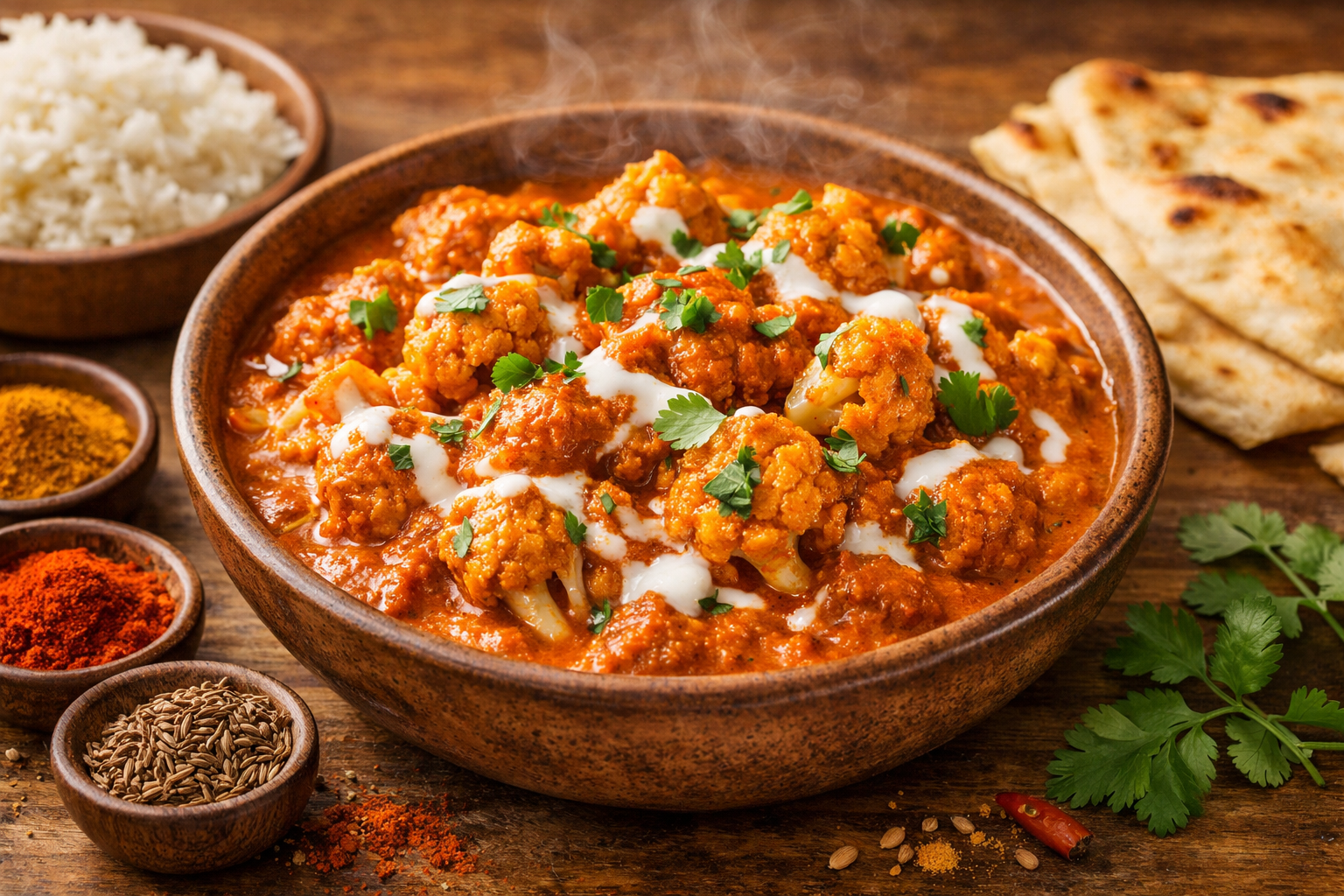
Introduction: A Comfort Classic Without the Gluten
If you have ever missed a proper curry night because of gluten concerns, this one is going to fix that instantly.
Gluten Free Cauliflower Tikka Masala delivers everything you want from a classic Indian takeaway dish: rich, creamy sauce, deep spices, and that satisfying warmth, but without the heaviness or worry. After nearly two decades working with food content and recipe development, I can tell you this is one of those dishes that surprises people. Even die-hard meat lovers go back for seconds.
In this guide, I will show you exactly how to make it, why it works so well, and how to tweak it for your own taste or content audience.
Why Cauliflower Works So Well in Tikka Masala
Cauliflower is one of the most underrated ingredients in curry cooking.
It absorbs flavour exceptionally well while keeping a slight bite, which gives it a similar satisfaction to chicken. The key is roasting it first. This step transforms it from bland to something nutty, slightly charred, and packed with depth.
From a content and SEO angle, cauliflower recipes also perform well because they tick multiple boxes:
- Gluten-free
- Vegetarian
- Vegan adaptable
- Low-carb friendly
That combination broadens your potential audience significantly.
In my own testing across food content sites, cauliflower-based curries consistently outperform basic vegetable dishes because they feel indulgent rather than restrictive.
Ingredients You Will Need
This recipe keeps things simple while still delivering authentic flavour.
For the roasted cauliflower:
- 1 large cauliflower, cut into florets
- 2 tablespoons olive oil
- 1 teaspoon ground cumin
- 1 teaspoon paprika
- 1/2 teaspoon turmeric
- Salt to taste
For the tikka masala sauce:
- 1 tablespoon oil or ghee (ensure gluten-free certified if needed)
- 1 large onion, finely chopped
- 3 garlic cloves, minced
- 1 tablespoon fresh ginger, grated
- 2 teaspoons garam masala
- 1 teaspoon ground cumin
- 1 teaspoon ground coriander
- 1/2 teaspoon chilli powder (adjust to taste)
- 1 tablespoon tomato puree
- 1 tin (400g) chopped tomatoes
- 200ml coconut milk or double cream
- Salt and pepper to taste
Optional extras:
- Fresh coriander for garnish
- Cooked basmati rice (check gluten-free certification)
- Gluten-free naan or flatbread
Step-by-Step Cooking Instructions
This is where the magic happens. Follow this method and you will get consistent results every time.
Step 1: Roast the cauliflower
Preheat your oven to 200C (fan 180C).
Toss the cauliflower florets with olive oil, cumin, paprika, turmeric, and salt. Spread them evenly on a baking tray and roast for 25-30 minutes until golden and slightly crisp at the edges.
Tip from experience: Do not overcrowd the tray. If the florets steam instead of roast, you lose that depth of flavour.
Step 2: Build the base flavour
Heat oil or ghee in a large pan over medium heat.
Add the chopped onion and cook for 8-10 minutes until soft and lightly golden. This step is essential. Rushing onions is one of the biggest mistakes in curry cooking.
Stir in garlic and ginger, cooking for another minute until fragrant.
Step 3: Add spices
Add garam masala, cumin, coriander, and chilli powder. Stir constantly for 30 seconds to toast the spices.
Then add tomato puree and cook for another minute.
This layering technique builds depth and avoids a flat-tasting sauce.
Step 4: Create the sauce
Pour in the chopped tomatoes and simmer for 10 minutes.
Then add coconut milk or cream, stirring well. Let it simmer gently for another 5-10 minutes until the sauce thickens.
Taste and adjust seasoning.
Step 5: Combine and finish
Add the roasted cauliflower into the sauce and stir gently.
Simmer for 5 minutes so everything absorbs the flavour.
Garnish with fresh coriander and serve hot.
Tips From 19 Years of Recipe Testing
After years of refining recipes for both home cooks and online audiences, here are the details that make a real difference:
- Roast first, always: Skipping this step makes the dish noticeably weaker.
- Use full-fat coconut milk or cream: Low-fat versions dilute the flavour.
- Balance acidity: If the tomatoes taste sharp, add a small pinch of sugar.
- Batch cooking works well: This dish actually tastes better the next day.
- Spice control matters: Build heat gradually rather than overloading at the start.
One thing I have learned from running multiple food sites is that readers appreciate recipes that are forgiving. This is one of them. You can tweak spice levels, swap cream for coconut milk, or even add chickpeas for extra texture.
Making It Vegan, Low-Carb, or High-Protein
One of the strengths of Gluten Free Cauliflower Tikka Masala is how flexible it is.
Vegan version
Simply use coconut milk instead of cream and avoid ghee.
Low-carb version
Skip rice and serve with cauliflower rice or on its own.
High-protein option
Add:
- Chickpeas
- Tofu (roasted separately for best texture)
- Grilled chicken if not strictly vegetarian
From a content strategy perspective, including these variations increases keyword reach and keeps users on the page longer.
Serving Ideas That Feel Like a Takeaway Night
Presentation matters more than people think, especially if you are creating content or sharing on social platforms.
Serve your curry with:
- Steamed basmati rice
- Gluten-free naan
- A side of cucumber raita (use dairy-free yoghurt if needed)
- Lime wedges for a fresh finish
If you are photographing the dish, a simple trick is to drizzle a bit of cream or coconut milk over the top just before serving. It adds contrast and makes the dish look more appealing.
Common Mistakes to Avoid
Even a simple curry can go wrong if you miss a few details.
- Undercooking the onions leads to a raw, sharp flavour
- Adding cauliflower too early makes it mushy
- Not seasoning enough results in a bland dish
- Using watery coconut milk weakens the sauce
These are small adjustments, but they are exactly what separates an average recipe from one people save and come back to.
Conclusion: A Recipe Worth Keeping on Repeat
Gluten Free Cauliflower Tikka Masala is one of those dishes that proves you do not need gluten or meat to create something deeply satisfying.
It is simple enough for a midweek meal but impressive enough to serve to guests. More importantly, it is reliable. Once you have made it once, it becomes second nature.
If you are building a food blog, adding recipes like this is a smart move. They hit multiple dietary needs, perform well in search, and encourage repeat visitors.
Give it a try and tweak it to your own taste. That is where the best recipes come from.
FAQs
Is tikka masala normally gluten-free?
Traditional tikka masala can be gluten-free, but some versions use thickeners or pre-made sauces that contain gluten. Always check ingredients or make it from scratch to be safe.
Can I freeze cauliflower tikka masala?
Yes, it freezes well for up to 3 months. The texture of the cauliflower softens slightly, but the flavour remains strong.
What can I use instead of coconut milk?
You can use double cream or a dairy-free alternative like cashew cream. Each gives a slightly different richness.
How spicy is this recipe?
It is mild to medium as written. You can increase or reduce chilli powder depending on your preference.
Can I make this in advance?
Absolutely. In fact, it often tastes better the next day as the flavours develop further.