Gluten Free Breakfasts and Snacks
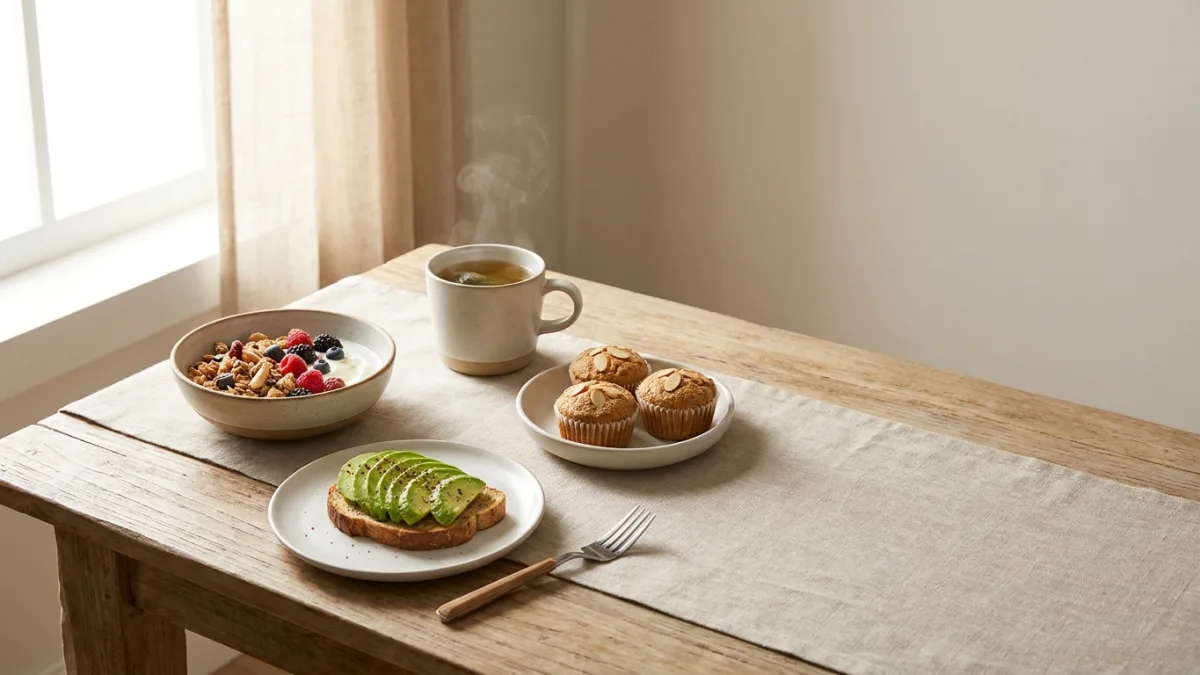

Your complete guide to delicious gluten-free breakfasts and snacks that support your health goals.
What You'll Learn
Naturally gluten-free breakfast options, batch-prep strategies, label-reading skills, and how to combine gluten-free eating with Slimming World plans.Why This Helps
Save time with meal prep, avoid hidden gluten sources, feel satisfied all morning, and support your weight loss goals without feeling restricted.Important Note
Not all gluten-free products are healthier. Many contain more sugar and fat than regular versions-focus on whole foods first.
Going gluten-free doesn't mean boring breakfasts. Whether you're managing coeliac disease or following Slimming World, you'll find quick recipes and practical meal prep strategies that actually fit your morning routine-no complicated ingredients required.
Why Going Gluten-Free for Breakfast Matters
Starting your day gluten-free doesn’t mean sacrificing taste or satisfaction.
Whether you’re managing coeliac disease, gluten sensitivity, or following a Slimming World plan, breakfast sets the tone for your entire day. A proper gluten-free breakfast keeps your energy steady, supports weight management goals, and eliminates the bloating and discomfort that gluten can trigger in sensitive individuals.
Cross-Contamination Alert
Always use separate toasters, utensils, and check for 'certified gluten-free' labels
The key challenge? Most traditional breakfast staples-toast, cereals, pastries-are gluten-packed. But here’s the good news: you’ve got dozens of naturally gluten-free options that are just as convenient and far more nutritious. From protein-rich eggs to fibre-loaded porridge made with gluten-free oats, your breakfast choices can actually improve when you ditch the gluten.
Understanding Gluten and Why Some People Avoid It
Gluten is a protein found in wheat, barley, rye, and their derivatives.
For people with coeliac disease, consuming gluten triggers an autoimmune response that damages the small intestine. According to research published in the Annals of Family Medicine, prevalence in 2020 was 0.36% (1 in every 278 people in the UK), which was almost double the prevalence in 2010.
Others experience non-coeliac gluten sensitivity, where gluten causes digestive discomfort, fatigue, or brain fog without the intestinal damage.
Beyond medical necessity, many people following weight loss plans like Slimming World find that reducing gluten helps them feel lighter and less bloated. Gluten-containing foods are often highly processed and calorie-dense, so swapping them for whole, naturally gluten-free foods can support your weight goals.
The Cross-Contamination Challenge at Breakfast
Even if a food is naturally gluten-free, cross-contamination during manufacturing or preparation can introduce gluten.
Oats are a perfect example-they’re naturally gluten-free but often processed in facilities that handle wheat, making them unsafe unless labelled “gluten-free oats.”
Watch out for these breakfast contamination risks:
- Shared toasters (gluten crumbs transfer to your gluten-free bread)
- Butter or spreads contaminated by regular toast crumbs
- Cereals with “may contain” warnings
- Breakfast sausages or bacon with hidden wheat fillers
Always check labels for “certified gluten-free” symbols and keep separate utensils and prep areas if you’re cooking for mixed dietary needs.
How Gluten-Free Eating Fits with Slimming World
Slimming World’s food optimising system focuses on Free Foods, Healthy Extras, and Syns-and plenty of gluten-free options fit perfectly within this framework.
Natural proteins like eggs, lean meats, and fish are Free Foods. Gluten-free oats can be your Healthy Extra B choice, while gluten-free bread typically counts as Syns (usually around 3-4 Syns per slice, depending on the brand).
The beauty of combining gluten-free eating with Slimming World is that you’re naturally steered toward whole foods rather than processed gluten-free alternatives, which can be high in fat and sugar. A veggie-packed omelette or fruit-topped yoghurt bowl keeps you satisfied without wasting Syns on mediocre gluten-free pastries.
Quick and Easy Gluten-Free Breakfast Ideas
Mornings are hectic, and you need breakfast options that don’t require a culinary degree or an hour of prep time.
These gluten-free breakfasts come together in minutes and keep you fuelled until lunch.
Quick Egg Breakfast Ideas
5 options- 1 Scrambled eggs with smoked salmon and chives
- 2 Poached eggs on gluten-free toast with avocado
- 3 Spanish-style omelette with peppers and onions
- 4 Egg muffins with spinach and cherry tomatoes
- 5 Shakshuka with eggs in spiced tomato sauce
Egg-Based Breakfasts for Maximum Protein
Eggs are your gluten-free breakfast superstar.
They’re naturally free from gluten, packed with protein (about 6-7g per egg), and incredibly versatile. A simple scrambled egg takes three minutes, while a veggie-loaded omelette gives you a restaurant-quality meal at home.
Quick egg breakfast options:
- Scrambled eggs with smoked salmon and chives
- Poached eggs on gluten-free toast with avocado
- Spanish-style omelette with peppers and onions
- Egg muffins baked with spinach and cherry tomatoes (make ahead for the week)
- Shakshuka (eggs poached in spiced tomato sauce)
For Slimming World followers, eggs are Free Foods, so you can eat them without counting. Add vegetables to bulk up your meal and keep it satisfying. If you’re short on time, microwave scrambled eggs cook in 90 seconds-just whisk with a splash of milk, microwave for 30 seconds, stir, then another 30-60 seconds.
Porridge and Overnight Oats Done Right
Oats are naturally gluten-free, but you must buy certified gluten-free oats to avoid cross-contamination.
Once you’ve got the right oats, porridge becomes one of the most comforting and nutritious gluten-free breakfasts available.
Traditional porridge takes five minutes on the hob or three minutes in the microwave. Use 40g gluten-free oats (your Healthy Extra B on Slimming World) with water or milk, then top with fresh berries, a drizzle of honey, or sliced banana. The fibre content keeps you full for hours.
Overnight oats require even less effort-mix oats with milk or yoghurt before bed, refrigerate, and wake up to ready-made breakfast. Add chia seeds for extra omega-3s, or stir through cinnamon and grated apple for a naturally sweet twist.
According to research on oat beta-glucan, intake of at least 3 grams daily lowers total and LDL cholesterol levels by 5 to 10% in people with normal or elevated blood cholesterol levels.
Smoothie Bowls and Yoghurt Parfaits
When you want something cold and refreshing, smoothie bowls and yoghurt parfaits deliver nutrition without any gluten concerns.
Greek yoghurt is naturally gluten-free and provides probiotics for gut health-particularly beneficial if you’ve been dealing with digestive issues from past gluten exposure.
Build a basic smoothie bowl by blending frozen berries with a banana and a splash of milk until thick. Pour into a bowl and top with gluten-free granola, coconut flakes, and fresh fruit. The thick texture makes it feel more substantial than a drinkable smoothie, so you’ll feel properly satisfied.
For yoghurt parfaits, layer Greek yoghurt with fresh berries and gluten-free granola in a glass. Make them in mason jars the night before for grab-and-go convenience. Just keep the granola separate until you’re ready to eat so it stays crunchy.
Gluten-Free Toast and Toppings
Not all gluten-free bread is created equal.
Some brands produce dry, crumbly loaves that fall apart when you spread butter, while others make bread that’s genuinely delicious. Popular UK brands like Genius, Warburtons Gluten Free, Promise Gluten Free, and Schar offer decent options.
Toast your gluten-free bread properly-it often needs a minute longer than wheat bread to get crispy. The extra toasting time improves both texture and flavour.
Gluten-free toast topping ideas:
- Mashed avocado with cherry tomatoes and black pepper
- Peanut butter with sliced banana and a drizzle of honey
- Scrambled eggs with smoked salmon
- Cottage cheese with cucumber and fresh dill
- Baked beans (check the label-most are gluten-free)
- Cream cheese with smoked mackerel
Remember that gluten-free bread usually counts as Syns on Slimming World (around 3-4 Syns per slice), so factor this into your daily allowance.
Batch-Prep Gluten-Free Breakfasts for Busy Mornings
Meal prep transforms chaotic mornings into calm ones.
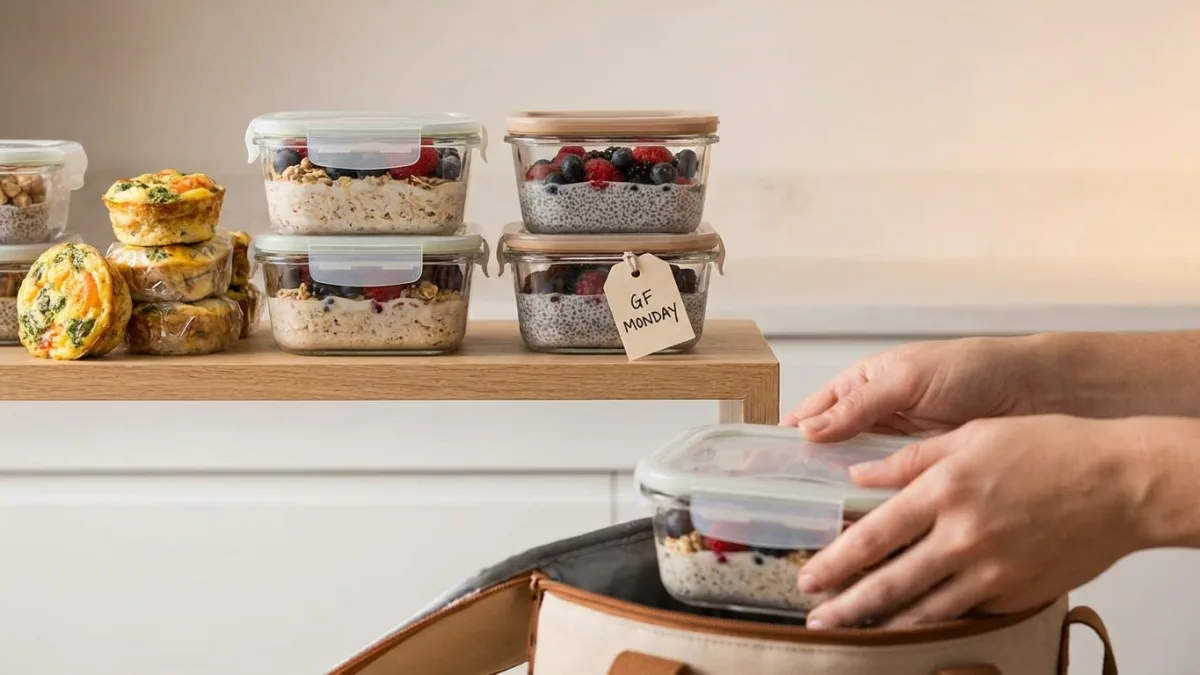
Spend an hour on Sunday preparing breakfasts for the week, and you’ll thank yourself every rushed weekday morning.
Apple & Berry
Apple cinnamon, then mixed berries
Banana Peanut
Mashed banana with peanut butter
Tropical
Mango, pineapple, coconut flakes
Chocolate Cherry
Cocoa powder with fresh cherries
Make-Ahead Egg Muffins and Frittatas
Egg muffins are portable protein bombs that reheat perfectly.
Whisk together 8-10 eggs with your choice of vegetables (spinach, peppers, mushrooms, tomatoes), pour into a greased muffin tin, and bake at 180°C for 20-25 minutes. Each muffin provides a complete breakfast that you can grab from the fridge and microwave for 30 seconds.
Frittatas work on the same principle but in a larger format. Make a full frittata in a cast-iron skillet, slice it into wedges, and store in the fridge. A wedge of frittata with a side of fresh fruit makes a balanced breakfast that keeps you full until lunch.
Popular egg muffin combinations:
- Spinach, feta, and sun-dried tomato
- Bacon, mushroom, and cheddar
- Red pepper, courgette, and herbs
- Smoked salmon and cream cheese
- Broccoli and mature cheddar
These egg-based breakfasts are Free Foods on Slimming World, so you can eat them without counting, though cheese would be your Healthy Extra A.
Overnight Oats Variations for Every Day
Prepare five jars of overnight oats on Sunday night, each with a different flavour profile, so you never get bored.
Use 40g gluten-free oats per jar (your Healthy Extra B), add 100ml milk or yoghurt, and mix in your chosen flavourings.
Five-day overnight oats plan:
- Monday: Apple and cinnamon with grated apple and a pinch of cinnamon
- Tuesday: Berry blast with mixed frozen berries and a teaspoon of honey
- Wednesday: Banana and peanut butter with mashed banana and 1 tablespoon peanut butter
- Thursday: Tropical with chopped mango, pineapple, and coconut flakes
- Friday: Chocolate and cherry with cocoa powder and fresh cherries
Store them in the fridge and grab one each morning. The oats soften overnight, creating a creamy texture that’s ready to eat cold or warmed in the microwave.
Gluten-Free Pancake and Waffle Batches
Make a big batch of gluten-free pancakes or waffles on the weekend, freeze them with parchment paper between each one, and toast them during the week for instant breakfast.
They taste remarkably fresh when reheated and save you from buying expensive gluten-free frozen pancakes.
Use a gluten-free flour blend (most supermarkets sell own-brand versions) or make pancakes from mashed banana and eggs for a naturally gluten-free, grain-free option. The banana-egg pancakes are just two ingredients-mash one ripe banana with two eggs, cook like regular pancakes. They’re sweet enough without added sugar and work brilliantly on Slimming World as they’re syn-free.
Store your batch-cooked pancakes in a freezer bag with parchment paper separating each one. Pop them in the toaster straight from frozen for 2-3 minutes, and you’ve got fresh-tasting pancakes ready for toppings.
Breakfast Smoothie Prep Packs
Pre-portion smoothie ingredients into freezer bags for instant blending.
Each bag should contain one serving of fruit, vegetables, and any extras like spinach or chia seeds. When you’re ready for breakfast, dump the contents into your blender with milk or yoghurt, blend for 60 seconds, and you’re done.
Smoothie pack combinations:
- Green machine: spinach, banana, mango, ginger
- Berry protein: mixed berries, banana, Greek yoghurt
- Tropical sunshine: pineapple, mango, coconut water, lime
- Chocolate peanut butter: banana, cocoa powder, peanut butter, milk
- Antioxidant boost: blueberries, strawberries, beetroot, apple
This method eliminates the morning decision-making and speeds up your routine. The frozen fruit means you don’t need ice, and everything blends smoothly straight from the freezer.
Gluten-Free Snacks to Keep You Satisfied
Snacking can derail your gluten-free or weight loss efforts if you’re not prepared.
Having the right snacks on hand prevents you from grabbing whatever’s convenient (and often gluten-containing).
- Naturally gluten-free
- Higher fiber content
- Lower calories
- More nutrients
- Added sugars & fats
- Lower fiber
- Higher calories
- Fewer nutrients
Protein-Packed Portable Snacks
Protein keeps you fuller longer and supports muscle maintenance, especially important if you’re losing weight.
These protein-rich snacks are naturally gluten-free and travel well.
Best portable protein snacks:
- Hard-boiled eggs (prep a batch for the week)
- Greek yoghurt pots (check labels-most are gluten-free)
- Cheese cubes or Babybel portions
- Sliced turkey or chicken breast
- Edamame beans (steamed and lightly salted)
- Protein balls made from dates, nuts, and cocoa powder
On Slimming World, eggs and lean meats are Free Foods, while cheese is your Healthy Extra A. Greek yoghurt counts as Free if it’s fat-free, or as Syns if it’s full-fat. Nuts are Healthy Extra B (around 20-25g depending on the type) or counted as Syns.
Fruit and Vegetable Snack Ideas
Fresh produce is naturally gluten-free and provides vitamins, minerals, and fibre.
The key is making fruits and vegetables as convenient as processed snacks.
Wash and chop vegetables on Sunday-carrot sticks, cucumber slices, pepper strips, cherry tomatoes-and store them in containers with water to keep them crisp. Pair with hummus (most brands are gluten-free, but check labels) or guacamole for a satisfying snack.
For fruit, prepare snack-sized portions in containers: apple slices with a squeeze of lemon to prevent browning, melon cubes, grapes in small bags, or berries washed and ready to eat. Fruit is Free on Slimming World, so you can snack without counting.
Combining fruit with a protein source (like apple slices with peanut butter) slows sugar absorption and keeps you satisfied longer.
Gluten-Free Crackers and Dips
When you want something crunchy, gluten-free crackers paired with nutritious dips hit the spot.
Brands like Nairn’s make excellent gluten-free oatcakes and crackers, while rice cakes offer a budget-friendly option.
Healthy dip combinations:
- Hummus with vegetable crudités
- Cottage cheese with chives and black pepper
- Guacamole with carrot sticks
- Tzatziki with cucumber slices
- Nut butter with apple slices
- Cream cheese with smoked salmon on rice cakes
Most crackers will count as Syns on Slimming World (check individual brands), while the dips vary-hummus is typically 1 Syn per tablespoon, guacamole is similar, and cottage cheese is Free.
Sweet Treats That Happen to Be Gluten-Free
Sometimes you need something sweet, and having gluten-free options prevents you from feeling deprived.
These treats satisfy sweet cravings without gluten.
Naturally gluten-free sweet snacks:
- Dark chocolate (most plain chocolate is gluten-free-check labels)
- Frozen grapes (taste like little sorbets)
- Medjool dates stuffed with almond butter
- Rice pudding made with coconut milk
- Fresh fruit salad with a dollop of Greek yoghurt
- Frozen banana slices dipped in melted dark chocolate
For Slimming World followers, most sweet treats will be Syns. Dark chocolate is around 5 Syns per 25g square, while fruit remains Free. Making your own treats gives you more control over ingredients and Syn values.
Emergency Snacks for Your Bag
Keep these shelf-stable gluten-free snacks in your bag, car, or desk drawer for genuine emergencies when hunger strikes unexpectedly.
Best emergency snacks:
- Individual nut butter packets
- Gluten-free protein bars (check labels carefully)
- Rice cakes (plain or lightly flavoured)
- Dried fruit (apricots, mango, apple rings)
- Roasted chickpeas
- Popcorn (plain or lightly salted-most popcorn is naturally gluten-free)
Check every packaged snack label, even if it seems obviously gluten-free. Manufacturers sometimes add wheat-based ingredients to unexpected products, and cross-contamination warnings matter if you have coeliac disease.
Navigating Gluten-Free Products and Labels
The gluten-free market has exploded in recent years, but not all products are created equal.
Understanding labels helps you make better choices for both health and taste.
UK Gluten-Free Standard
Products labeled 'gluten-free' must contain less than 20 parts per million (ppm) of gluten. This legal threshold is safe for the vast majority of people with coeliac disease.
Coeliac UK, UK/EU Food LawDecoding “Gluten-Free” Certifications
In the UK and EU, products labelled “gluten-free” must contain less than 20 parts per million (ppm) of gluten.
According to Coeliac UK, only foods that contain 20 parts per million (ppm) or less can be labelled as ‘gluten free’. This is safe for the vast majority of people with coeliac disease.
Some products carry additional certifications like the Crossed Grain symbol from Coeliac UK, which provides extra assurance.
What different labels mean:
- “Gluten-free”: Contains less than 20ppm gluten (legally defined)
- “Very low gluten”: Contains 21-100ppm gluten (not safe for coeliacs)
- “May contain traces”: Manufactured in facilities that process gluten
- “Made in a dedicated gluten-free facility”: No cross-contamination risk
- Crossed Grain symbol: Independently verified as gluten-free
For people with coeliac disease, stick to products with clear gluten-free labelling or the Crossed Grain symbol. If you’re avoiding gluten for other reasons, your tolerance may be higher, but it’s still worth choosing properly labelled products.
Sneaky Sources of Gluten in Breakfast Foods
Gluten hides in surprising places. These breakfast items often contain gluten even when you wouldn’t expect it:
| Food Item | Why It Contains Gluten | Gluten-Free Alternative |
|---|---|---|
| Sausages | Rusk or breadcrumb fillers | Look for “gluten-free sausages” |
| Bacon | Some brands use wheat in processing | Check labels; most plain bacon is safe |
| Baked beans | Some sauces contain wheat flour | Heinz and most major brands are GF |
| Yoghurt | Granola pieces or cookie mix-ins | Plain yoghurt with fresh fruit |
| Instant porridge | May contain wheat or cross-contamination | Use certified gluten-free oats |
| Hash browns | Some contain wheat as a binder | Make your own or check labels |
| Flavoured coffee | Barley malt or wheat-based flavourings | Plain coffee with milk |
Always read the full ingredient list, not just the allergy information. Manufacturers can change recipes without warning, so check labels even on products you’ve bought before.
Best Gluten-Free Brands Available in the UK
Some brands consistently deliver quality gluten-free products that actually taste good.
Here are the most reliable options you’ll find in UK supermarkets:
Bread and baked goods:
- Genius (widely available, good texture)
- Warburtons Gluten Free (soft, holds together well)
- Schar (European brand, excellent croissants and rolls)
- Promise Gluten Free (small bakery, premium quality)
Cereals and breakfast products:
- Nairn’s (oatcakes, granola, porridge)
- Rude Health (pricey but delicious granola and porridge)
- Kellogg’s (several gluten-free cereals including Rice Krispies)
Snacks:
- Nairn’s (oatcakes and crackers)
- Nakd (fruit and nut bars)
- Eat Natural (check labels-many bars are GF)
- Propercorn (popcorn snacks)
Most major supermarkets also have their own free-from ranges that offer good value compared to branded products. Tesco, Sainsbury’s, and Asda all have extensive gluten-free selections.
When Gluten-Free Products Aren’t Healthier
Here’s an uncomfortable truth: many gluten-free products are nutritionally inferior to their gluten-containing equivalents.
Manufacturers often add extra sugar, fat, and stabilisers to improve texture and taste in gluten-free baked goods.
A slice of gluten-free bread might contain more calories, less fibre, and more sugar than regular bread. Gluten-free biscuits and cakes are still biscuits and cakes-they’re not health foods just because they lack gluten.
Nutritional downsides of processed gluten-free foods:
- Often higher in refined carbohydrates and sugar
- Frequently lower in fibre than whole grain equivalents
- Can be more calorie-dense due to added fats
- May lack the vitamins and minerals found in fortified wheat products
- Usually more expensive per serving
This is why focusing on naturally gluten-free whole foods-eggs, fruits, vegetables, lean meats, dairy, gluten-free oats-serves you better than relying heavily on processed gluten-free alternatives. If you’re following Slimming World, you’ll notice that whole foods are Free or Healthy Extras, while processed gluten-free products rack up Syns quickly.
Creating a Sustainable Gluten-Free Breakfast Routine
Going gluten-free long-term requires systems and habits that make it effortless rather than a daily struggle.
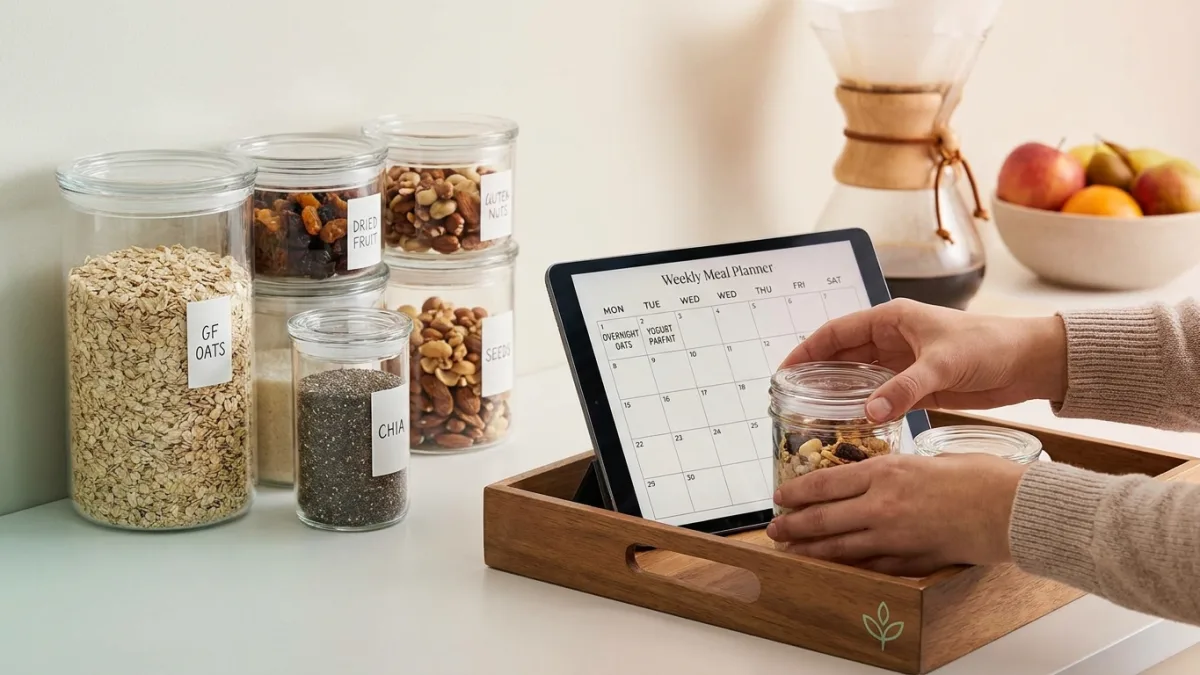
These strategies help you maintain a gluten-free lifestyle without feeling restricted.
Weekly Meal Planning for Gluten-Free Success
Planning your week of breakfasts on Sunday eliminates daily decision fatigue and ensures you have the right ingredients on hand.
Sit down with a cup of tea and map out seven days of breakfasts based on your schedule.
Sample weekly gluten-free breakfast plan:
- Monday: Overnight oats (prepared Sunday night)
- Tuesday: Scrambled eggs with smoked salmon
- Wednesday: Greek yoghurt with berries and gluten-free granola
- Thursday: Egg muffins (batch-made Sunday) with fruit
- Friday: Gluten-free toast with avocado and poached egg
- Saturday: Gluten-free pancakes with maple syrup
- Sunday: Full English with gluten-free sausages and hash browns
Mix quick options (overnight oats, yoghurt) with more involved breakfasts (pancakes, full English) based on your morning schedule. Having a plan means you shop once, prep once, and execute smoothly all week.
Shopping Lists and Pantry Essentials
Keep these gluten-free staples stocked so you can always throw together a decent breakfast without a special shop:
Fridge essentials:
- Eggs (Free on Slimming World)
- Greek yoghurt (Free if fat-free)
- Milk (part of Healthy Extra A)
- Cheese (Healthy Extra A)
- Smoked salmon
- Fresh vegetables (peppers, mushrooms, tomatoes, spinach)
- Fresh fruit (berries, bananas, apples)
Cupboard staples:
- Gluten-free oats (Healthy Extra B)
- Gluten-free bread (Syns)
- Gluten-free flour blend
- Rice cakes
- Nut butters
- Honey or maple syrup
- Canned beans
- Gluten-free cereal
Freezer backups:
- Frozen berries
- Gluten-free bread (freezes well)
- Batch-cooked pancakes
- Egg muffins
- Frozen vegetables for omelettes
Having these items means you’re never more than ten minutes away from a proper gluten-free breakfast, even when you haven’t planned ahead.
Eating Out and Travel Strategies
Breakfast out can be trickier when you’re gluten-free, but most cafés and restaurants now cater to dietary requirements.
Chain restaurants in the UK are legally required to provide allergen information, making it easier to identify safe options.
Safe gluten-free breakfast orders:
- Poached or scrambled eggs with bacon and mushrooms (skip the toast or request gluten-free)
- Greek yoghurt with fruit and honey
- Smoothie bowls (confirm granola is gluten-free)
- Omelettes (verify no flour is added to make them fluffy)
- Smoked salmon and cream cheese (with gluten-free toast if available)
Always mention that you need gluten-free options when ordering. If you have coeliac disease, emphasise that it’s a medical requirement, not a preference, to ensure they take cross-contamination seriously.
For travel, pack gluten-free snacks in your bag-protein bars, rice cakes, fruit, nuts. Hotel breakfasts often have naturally gluten-free options like eggs, yoghurt, and fruit, even if they don’t have gluten-free bread.
Managing Social Situations and Family Meals
When you’re the only gluten-free person in your household, breakfast can get complicated.
The key is creating systems that work for everyone without requiring separate meals.
Strategies for mixed households:
- Keep a separate, clearly labelled gluten-free toaster to prevent cross-contamination
- Store gluten-free bread in a different location or container
- Use separate butter/spread tubs for gluten-free bread (or use squeeze bottles)
- Make naturally gluten-free breakfasts that everyone can enjoy (eggs, porridge, yoghurt bowls)
- Batch-cook gluten-free items you can grab while others have regular breakfast
When visiting friends or family, bring your own gluten-free bread or offer to make breakfast for everyone using naturally gluten-free options. Most people are happy to accommodate dietary needs when you make it easy for them.
Budget-Friendly Gluten-Free Eating
Gluten-free products cost more-that’s an unavoidable reality.
But you can manage a gluten-free diet without breaking the bank by focusing on naturally gluten-free whole foods rather than processed alternatives.
Money-saving strategies:
- Buy gluten-free oats in bulk (much cheaper per serving than gluten-free cereal)
- Choose eggs as your breakfast protein (economical and versatile)
- Make your own gluten-free granola instead of buying it
- Use frozen fruit instead of fresh for smoothies and porridge toppings
- Buy supermarket own-brand gluten-free products instead of premium brands
- Batch-cook and freeze to reduce waste
On Slimming World, this approach aligns perfectly because the most budget-friendly options (eggs, porridge, fruit, yoghurt) are also Free Foods or Healthy Extras. You save money while supporting your weight loss goals.
Frequently Asked Questions
What is a typical gluten-free breakfast?
A typical gluten-free breakfast centres on naturally gluten-free foods like eggs, gluten-free oats, yoghurt, and fruit. Popular options include scrambled eggs with vegetables, porridge made from certified gluten-free oats topped with berries, Greek yoghurt with gluten-free granola, or smoothie bowls. Many people also enjoy gluten-free toast with avocado or nut butter. The key is choosing whole foods rather than relying heavily on processed gluten-free alternatives.
What can I eat for breakfast if I am gluten intolerant?
Focus on whole foods that are naturally free from gluten. Eggs cooked any way make an excellent protein-rich start. Porridge using certified gluten-free oats provides sustained energy. Greek yoghurt with fresh fruit and seeds offers probiotics and nutrients. Smoothies made with fruit, vegetables, and milk work well for busy mornings. You can also have gluten-free toast, but check labels carefully.
What to have for breakfast without gluten?
Breakfast without gluten is easier than you might think. Try a vegetable omelette with cheese, Greek yoghurt topped with berries and honey, porridge made from gluten-free oats with sliced banana, or a smoothie bowl with fresh fruit and gluten-free granola. Smoked salmon with cream cheese on rice cakes, avocado on gluten-free toast, or a full English breakfast using gluten-free sausages all work brilliantly.
What are the best gluten-free snacks?
Naturally gluten-free snacks include vegetables, fruits, nuts, and dairy foods such as cheese and yogurt. Try hummus with veggie sticks, trail mix with nuts and dried fruit, rice cakes with nut butter, or Greek yogurt parfaits. Fresh fruit like apples, berries, bananas, grapes, and oranges make easy grab-and-go options.
What ice cream has no gluten?
Most plain ice cream is naturally gluten-free, as it’s made from milk, cream, sugar, and flavourings. However, mix-ins like cookie dough, brownie pieces, or wafer cones contain gluten. In the UK, brands like Ben & Jerry’s clearly label their gluten-free flavours. Other brands with gluten-free varieties include Häagen-Dazs, Breyers, and Talenti. Always check labels carefully before purchasing.
Can I meal prep gluten-free breakfast options?
Absolutely-meal prep makes mornings easier. Whip up a big batch of gluten-free pancakes or waffles on the weekend and freeze them. You can also prepare mini frittatas, overnight oats in jars, or energy bites with oats and nut butter. Prepare batches of egg muffins, energy bites, or gluten-free waffles in advance and store them in the freezer for quick breakfasts throughout the week.